Dec 10, 2025
Web Design

Designing a B2B website today demands a thoughtful approach to understand the users, especially the buyer psychology, technology, and narrative clarity. Modern business visitors come with clear intentions. They search for expertise, proof, efficiency, and a frictionless digital journey. A great B2B website welcomes them with clarity, guides them with structure, and inspires confidence with substance.
Here are 20 deeply valuable and insight-rich ideas to help you build a B2B website that elevates your brand presence, improves engagement, and supports meaningful conversions.
What Is B2B Website Design?
B2B web design creates and tailors a website that helps businesses understand your offering quickly and move through their decision process with clarity. It brings structure, intention, and coherence to how you present your products, services, and value. A well-designed B2B website feels guided, approachable, and purposeful, allowing visitors to absorb information without friction.
A strong B2B experience explains complex ideas in a way that feels simple and intuitive. It supports buyers with thoughtful navigation, reassuring clarity, and a flow that feels steady and professional.
Modern B2B design also draws from broader web design principles, including sustainable web design, cross cultural design in web design, and the ability to scale content efficiently through monthly professional graphic design services or unlimited web design services. These approaches help teams maintain a polished, consistent, and globally relevant presence.
A well-designed B2B website helps your audience by:
Presenting your product or service with unmistakable clarity
Supporting long decision cycles with structured, meaningful information
Offering a dependable, easy-to-navigate experience grounded in proven web design principles
Encouraging action through intentionally and contextually placed CTAs
Building trust with consistent proof, expertise, and transparency
Adapting to diverse global audiences with thoughtful cross cultural design in web design
Reducing digital waste and improving performance through sustainable web design
Scaling workflows with monthly professional graphic design services and unlimited web design services for ongoing updates
These goals shape a journey that helps visitors feel informed and supported.
Key Elements You Commonly See on B2B Websites
Modern B2B website design relies on content that helps buyers understand your solution with certainty and move through their evaluation with ease. When businesses look for the best ideas for B2B website design, they often expect content that removes confusion and offers practical clarity. The most effective B2B platforms bring together elements that strengthen trust and support informed decision-making.
Here are the content components most B2B buyers rely on:
Whitepapers, long-form guides, and research reports that show depth and expertis
Case studies with measurable outcomes, giving visitors proof of real-world impact
Detailed product specifications and solution overviews that simplify technical understanding
Industry-focused pages tailored to segments such as finance, healthcare, or manufacturing
Interactive demos, resource hubs, and exploration tools that support a self-guided learning experience
Each element enriches your B2B digital experience and helps buyers see how your solution fits into their environment. These assets strengthen your B2B content strategy and set the foundation for a high-converting B2B website.
Design Principles That Anchor B2B Websites
Strong B2B design rests on foundations that make information easy to grasp and navigate. These core principles include:
Consistent branding that strengthens recognition
Scannable layouts that help visitors find answers quickly
Structured typography that makes reading effortless
Clear CTA patterns that guide actions naturally
Professional and purposeful visuals that reinforce credibility
Thoughtful spacing that keeps content comfortable and digestible
Together, they create an experience that feels calm, organized, and trustworthy.
Top 20 Ideas for B2B Website Design
1. Build a Clear and Buyer-Focused Information Architecture
A strong B2B website begins with a structured foundation. Organize your pages around the decision-making patterns of your buyers. Give them direct pathways to solutions, industry pages, product specs, resources, and demonstrations. This thoughtful clarity makes the website feel intuitive and dependable.
2. Design a Mobile-First Experience for On-the-Move Decision Makers
Many executives and managers review vendor websites during travel, briefings, or meetings. A mobile-first design ensures your content adjusts gracefully on every screen. Crisp typography, spaced layouts, touch-friendly elements, and scalable visuals form a professional and effortless mobile journey.
3. Use Simplified and Bold Navigation
Navigation is the doorway to your entire experience. Replace complex menus with clear labels that gently guide your visitor to meaningful sections. Use structured mega menus, resource hubs, and well-defined category groupings to help them find what they need instantly.
4. Embrace Modern Minimalism to Support Clarity
Minimalism enhances the authority of your message by removing unnecessary distractions. Generous spaces, thoughtful typography, and balanced layouts help the visitor process information quickly. It creates a sense of calm that business users appreciate when exploring essential details.
5. Create High-Definition Visual Narratives
Strong visuals bring credibility and sophistication to B2B websites. Use high-quality photographs, clean illustrations, purposeful icons, and polished product graphics. These visuals help your audience form a clear mental picture of what you offer and why it matters.
6. Introduce Motion Design and Scrolltelling
Micro animations, smooth transitions, and scroll-based storytelling help you lead visitors through complex solutions in an engaging rhythm. This creates a guided narrative where important messages unfold naturally as the user moves through the page.
7. Adopt Interactive and AI-Powered Touchpoints
Modern B2B buyers expect real-time support. Intelligent chatbots, guided selectors, AI-based recommendations, and interactive configurators enrich the experience. They help visitors explore solutions faster and feel more supported in their journey.
8. Prioritize Accessibility and Inclusive Design
Accessible design creates an equal and respectful experience for all visitors. Clear text hierarchy, proper color contrast, keyboard navigation, descriptive alt text, and readable layouts reflect a thoughtful brand that values every user.
9. Strengthen Your Website with Trust-Building Proof
Business decisions rely on credibility. Showcase case studies, testimonials, partner logos, certifications, awards, and real project stories. Place this proof near CTAs or solution pages to reinforce confidence right when your user is considering action.
10. Use Meaningful Micro-Interactions for Delight and Clarity
Small visual cues help visitors understand what’s happening on the page. Button feedback, soft loading effects, interactive form fields, and hover animations make the website feel modern and intuitive. These brief moments add an elegant human quality to the experience.
11. Integrate Cinematic Visuals and Immersive Backgrounds
Full-screen visuals, subtle gradients, and smooth video banners create depth and emotional resonance. They bring your brand to life and help you communicate complex ideas in a visually compelling way.
12. Tell Your Story Through Structured Content Narratives
Every section of your website should support a narrative thread that explains who you are, what you deliver, and how you help. Use storytelling to highlight transformation, outcomes, and impact. Thoughtful narratives help visitors connect with your brand on a deeper level.
13. Optimize Page Speed for a Swift and Seamless Experience
Fast-loading pages influence how visitors perceive your brand. Compress images, optimize scripts, refine hosting, and use CDNs for global delivery. A smooth and quick interaction signals professionalism and technical maturity.
14. Build a Flexible and Scalable Back-End System
Your website should evolve effortlessly as your business expands. Use flexible CMS platforms, modular architectures, and scalable cloud hosting. This approach ensures that new features, integrations, and content updates can be introduced easily without disrupting the foundation.
15. Establish Transparent Cookie and Privacy Standards
Clear privacy practices show your respect for user data. Use visible cookie controls, readable privacy policies, and transparent descriptions of how you handle information. This builds trust in industries where data governance matters deeply.
16. Maintain Consistent Branding Across Every Page
Your website should feel unified in voice, style, and emotion. Use a structured design system with consistent colors, typography, buttons, imagery, and writing patterns. This reinforces brand recognition and amplifies your credibility.
17. Craft Strong, Purpose-Driven CTAs
Each CTA should express a meaningful next step. Encourage the visitor to explore deeper with invitations such as request a consultation, schedule a walkthrough, or read the success story. These cues create a natural progression toward engagement.
18. Elevate SEO and Content with Strategic Depth
A B2B website gains authority through content that educates, informs, and supports long-term decisions. Create expert articles, whitepapers, comparisons, case studies, and solution guides. Integrate thoughtful keyword strategies to reach the right audience with clarity.
19. Use Clean, Streamlined Layouts to Reduce Cognitive Load
Business buyers appreciate structure. Organize content with modular sections, balanced spacing, distinct headers, and clear visual hierarchy. These layouts help users absorb information quickly and understand your value without effort.
20. Bring Sophistication Through Data Visualization and Personalization
Transform complex data into elegant charts, interactive dashboards, and visual models. Use personalization to show relevant content based on visitor behavior, industry, or interest. These touches help your website feel intelligent and tailored.
B2B Website Inspirations That Set a New Benchmark
Now that you have a clear understanding of the fundamentals, it helps to study real-world examples that demonstrate how thoughtful design translates into business impact. These websites show how clarity, structure, and compelling storytelling can guide B2B buyers with confidence.
Square
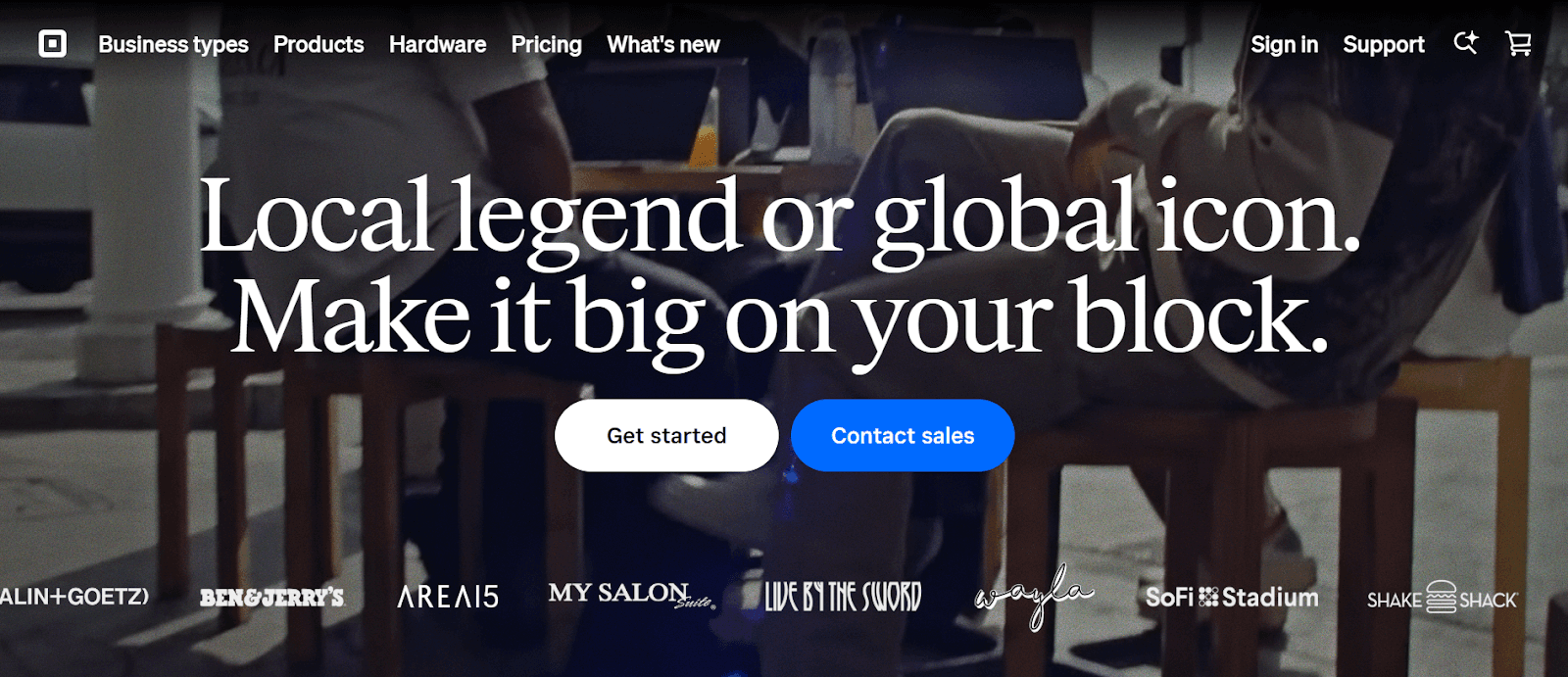
Square speaks directly to small and medium-sized businesses that want to scale with purpose. Its messaging carries an aspirational tone through lines like “Power Your Business” and “Sell Everywhere,” giving visitors a sense of momentum from the moment they land. The design stays clean and professional, supported by vibrant imagery and brief, purposeful copy. Each section guides users toward clear pathways, whether they need point-of-sale tools, payment solutions, or e-commerce capabilities. The result is a motivating experience that encourages users to explore, understand, and take the next step with confidence.
HubSpot
HubSpot has earned its position as a trusted name in inbound marketing, and its website reflects that strength with clarity and intention. The company offers a rich library of free resources like blogs, eBooks, templates, case studies, and learning tools that help build trust before visitors even consider a purchase. Its design uses well-placed CTAs that guide users through distinct paths, whether they are exploring the free CRM, subscribing to updates, or trying advanced tools. The interface stays organized, friendly, and structured around the buyer’s journey, allowing visitors to find answers quickly and move through the site with ease. HubSpot’s focus on education and customer success creates an experience that feels generous, insightful, and genuinely supportive.

IBM
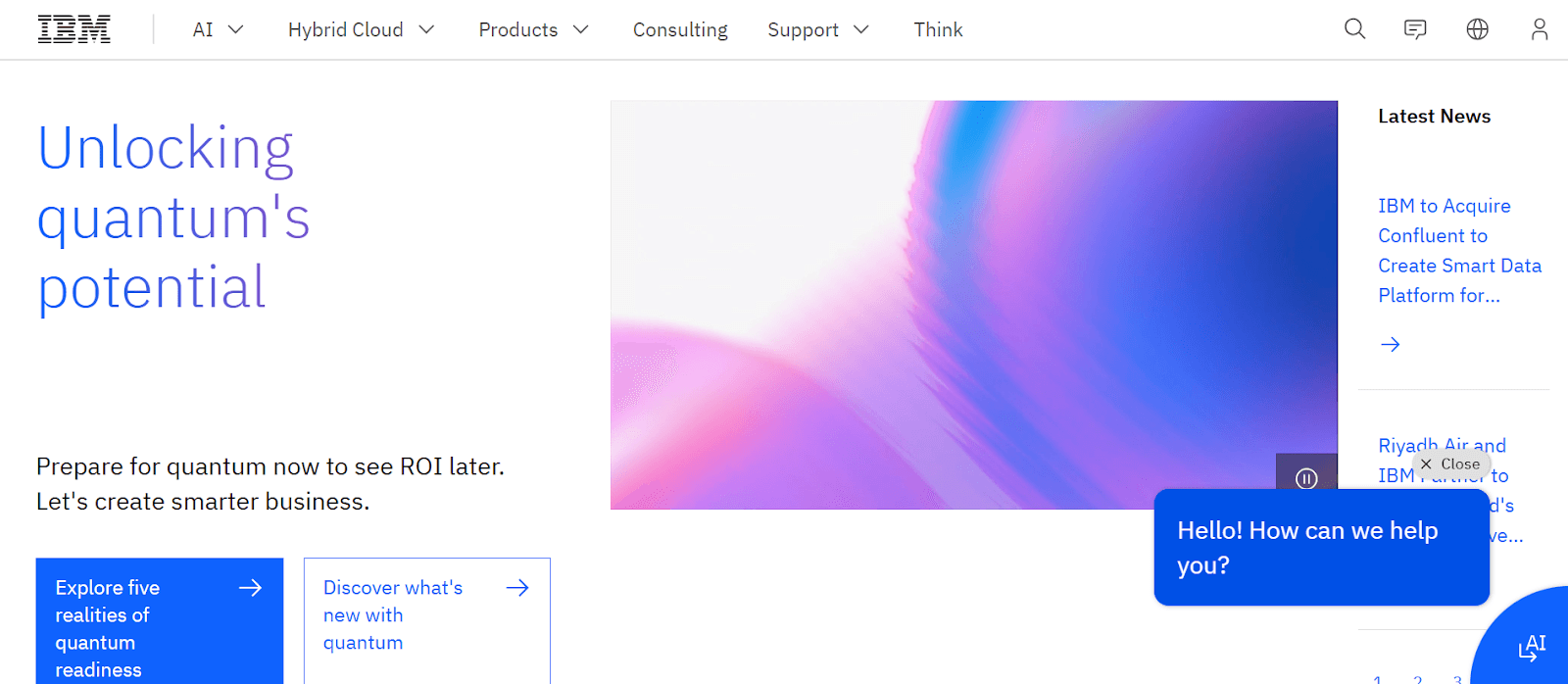
IBM’s website reflects the depth and breadth of a global technology leader, offering solutions that span AI, cloud computing, automation, and advanced enterprise services. Even with such a wide spectrum of products, the site maintains an organized and approachable structure. Its navigation is designed with care, using detailed dropdowns that provide clarity without overwhelming the visitor. Icons, short descriptions, and guided pathways help users move through a complex catalog with confidence. The result is a website that makes sophisticated technology feel accessible, allowing decision-makers to explore solutions at their own pace and understand exactly where each offering fits into their business landscape.
How to Measure the Real Impact of Your B2B Website
A B2B website grows with your business. It needs steady observation, thoughtful updates, and a clear understanding of how people move through it. When you measure its performance with care and intention, you begin to see how each element influences trust, interest, and eventual action.

Key Metrics to Pay Attention To
1. Conversion Rates: How Often Visitors Take Action
Conversions reflect the moments when a visitor chooses to take the next step, whether that is requesting a demo or signing up for a resource.
Look for pages that inspire action consistently
Notice where users hesitate or drop off
Simplify forms or strengthen CTAs when engagement feels low
2. Bounce Rates: Where Visitors Lose Interest
A high bounce rate often signals a disconnect between what the visitor expected and what they found.
Identify pages that lose users quickly
Refresh the structure or messaging to feel more inviting
Add clearer guidance to help visitors know what to do next
3. Time on Page: How Deeply Content Resonates
Time on page reveals how deeply your content resonates.
Longer visits often point to meaningful engagement
Short visits suggest the content may feel too dense or unclear
Break up text with supportive visuals or cleaner structure
4. Overall Traffic: The Strength of Your Reach
Traffic gives a wider view of your reach and visibility.
Growing traffic shows your brand is being discovered
If traffic rises but conversions stay flat, revisit the journey
Use this insight to resolve friction that may be slowing decisions
Tools That Reveal Real User Behavior
A/B Testing: Understanding What Works Best
A/B testing gives you a grounded way to examine how small adjustments shape user behavior. Two versions of a headline, a call-to-action phrase, or a page layout allow you to learn what your audience responds to naturally. These gradual refinements help you create pages that feel intuitive and supportive, encouraging deeper engagement over time.
Heatmaps: Seeing How Visitors Experience Your Pages
Heatmaps help you see the parts of your website that draw attention and the areas that remain unseen. This visual insight reveals how people read, scroll, and interact with each section. When important details sit in areas that visitors rarely reach, it becomes clear that the structure needs a more thoughtful arrangement to bring critical information into view.
Commitment to Continuous Refinement
Monitoring your website is an ongoing process. With each insight, you learn more about your audience and how to support their journey. Over time, these small, thoughtful improvements help your website become a stronger driver of trust, clarity, and long-term growth.
Emerging Trends in B2B Website Design
Leading brands are creating digital experiences that feel intuitive, intelligent, and genuinely helpful.
Here are the emerging trends reshaping the future of B2B website design and how top brands are embracing them with intention and clarity.
1. AI-Powered Personalization
AI is reshaping how B2B websites communicate, assist, and recommend solutions to their users. Brands are using intelligent systems to anticipate needs and streamline interactions
Examples you can learn from:
Intercom uses AI-driven chatbots to manage initial conversations, resolve common requests instantly, and direct complex issues to human support, resulting in faster response times and higher engagement.
Salesforce applies its Einstein AI to personalize content, automate workflows, and predict user needs, making every touchpoint more relevant and efficient.
AI helps B2B websites feel intuitive and responsive web design, even with large product catalogs and long decision cycles.
2. Progressive Web Apps (PWAs)
PWAs are transforming how B2B brands deliver mobile experiences, especially for audiences that depend on reliable, fast access across devices.
Notable implementations:
Alibaba improved mobile engagement and conversions after shifting to a PWA, making browsing faster and smoother for its global user base.
Forbes streamlined its mobile content experience using PWAs, offering fast-loading pages and improved accessibility for business audiences.
3. Voice Search Optimization
Voice search is reshaping how business users look for information. More buyers are using voice assistants to find solutions, compare features, and access resources hands-free. Optimizing B2B content for natural language queries helps brands stay visible.
Industry leaders:
HubSpot incorporates voice-search-ready content strategies, preparing businesses for conversational queries.
Microsoft Azure supports voice-enabled interactions through platforms like Cortana, making product information accessible hands-free.
4. Augmented Reality (AR) and Virtual Reality (VR)
AR and VR are transforming the B2B demo experience, especially for complex or high-value products. These technologies help prospects visualize solutions without the logistical barriers of in-person demos.
Real-world applications:
Siemens uses AR/VR to let prospects explore industrial machinery virtually, offering immersive previews that simplify technical decision-making.
Caterpillar provides virtual tours and operator training through AR/VR tools, allowing buyers to understand equipment functionality and safety features remotely.
These experiences elevate engagement and shorten the evaluation process for large-scale purchases.
Build a High-Performing B2B Website with Expert UX Guidance
At Slate, we help B2B brands create websites that feel clear, trustworthy, and conversion-driven. Our team works closely with product leaders, marketers, and founders to transform complex offerings into intuitive digital experiences that win attention and build long-term relationships.
Partner with us to:
✔️ Craft messaging that speaks directly to your buyer’s needs and drives action
✔️ Design seamless journeys that simplify decision-making and boost conversions
✔️ Modernize your site with smart tools, AI, and scalable design systems
✔️ Position your brand as a trusted leader in your industry, ready for growth
Ready to build a website that stands out and converts?
Explore our expert UX and design services → Explore Our Services
Want personalized support to create a website your customers will love?Let’s work together to make your vision a reality → Get in Touch
Disclaimer: All visuals used belong to their respective owners.